Chimney Resources
Chimney Anatomy & Glossary of Terms
Chimney work comes with its own vocabulary, and knowing the terms makes it much easier to understand an inspection report or a repair estimate. This glossary defines the key parts of a chimney and fireplace in plain language, grouped by where they sit in the system. Every term here is a real component our technicians work with every day.
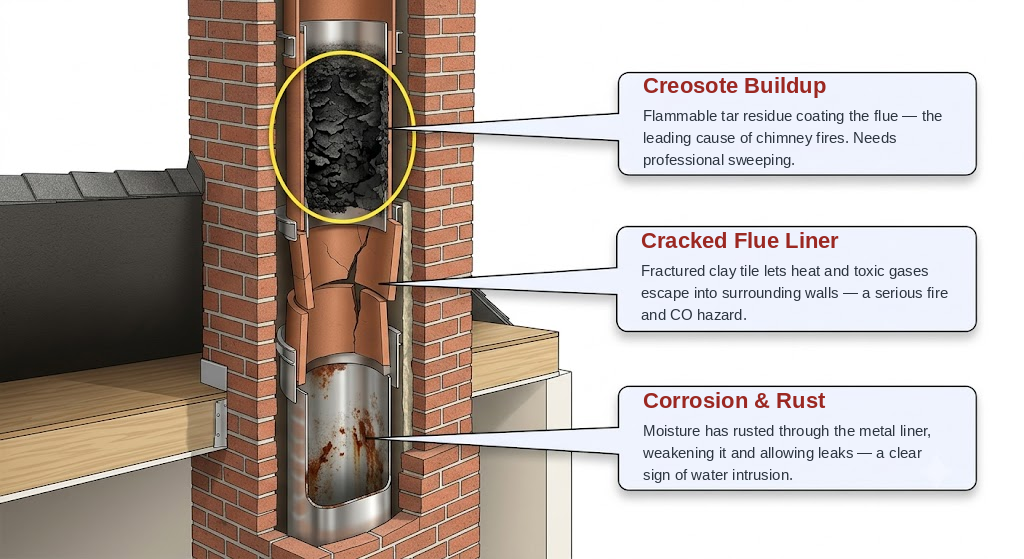
A labeled chimney, top to bottom. The definitions below follow the same parts, grouped by area.
Top of the Chimney
- Chimney Cap
- A covering mounted over the flue opening at the top of the chimney. It keeps out rain, animals, and debris while allowing smoke to vent, and usually includes a mesh screen. See cap installation.
- Chimney Crown
- The sloped cement or concrete surface at the very top of a masonry chimney. It seals the top of the structure and directs water away from the flue and brickwork. A cracked crown is a leading cause of leaks. See crown repair.
- Chase Cover
- A metal top that covers the entire open top of a factory-built (prefabricated) chimney's chase. It performs the sealing role that a crown does on a masonry chimney. See chase covers.
- Chase
- The framed, often siding-wrapped enclosure that houses a factory-built chimney. It is the box-like structure that surrounds the metal flue pipe on prefabricated chimneys.
- Spark Arrestor
- A mesh screen, typically part of the chimney cap, that prevents burning embers and sparks from escaping the top of the flue and reduces the risk of roof or brush fires.
Structure & Masonry
- Flashing
- The metal sealing material installed where the chimney meets the roofline. It waterproofs that junction and directs water away. Failed flashing is one of the most common sources of chimney leaks. See flashing repair.
- Mortar Joints
- The mortar between the bricks that bonds the masonry together and seals it against water. Mortar is designed to wear before the brick does, and deteriorated joints are restored with tuckpointing.
- Tuckpointing
- The process of removing deteriorated mortar from between bricks and repacking the joints with fresh mortar. It restores both the structural bond and the water seal without replacing the bricks. See tuckpointing.
- Spalling
- The flaking, cracking, or crumbling of a brick's face, caused by water absorbed into the masonry expanding and contracting. Spalling is progressive and is prevented with waterproofing.
- Efflorescence
- A white, powdery mineral residue that appears on brick as water evaporates out of the masonry. It is a visible sign of excess moisture moving through the chimney.
- Masonry Rebuild
- The reconstruction of part or all of a chimney using new brick and mortar. It is reserved for chimneys where the bricks themselves are failing or the structure has become unstable. See masonry rebuild.
Interior & Venting
- Flue
- The interior channel that runs up the length of the chimney and carries smoke and combustion gases out of the home. It is the passageway through which everything vents.
- Flue Liner
- The safety-critical inner lining of the flue that contains heat and toxic gases and protects the surrounding masonry and framing. Liners are made of clay tile, stainless steel, or cast-in-place cement. A cracked or missing liner is a safety hazard. See liner installation.
- Relining
- The installation of a new flue liner, most commonly stainless steel, to replace a cracked, deteriorated, or missing one, or to resize the flue for a new appliance. See relining.
- Draft
- The upward flow of air that pulls smoke and gases up and out of the chimney. Good draft is what keeps smoke out of the room; poor draft causes smoke to back up. See smoke and draft repair.
- Creosote
- A flammable, tar-like residue that accumulates inside the flue as wood burns. Excessive creosote buildup is a leading cause of chimney fires and is removed by a chimney sweep.
- Smoke Chamber
- The transitional space above the firebox that funnels smoke from the wide fireplace opening up into the narrower flue. Its shape is important to good draft.
The Fireplace
- Firebox
- The chamber where the fire actually burns. It is built from fire-resistant brick or refractory panels designed to contain intense heat. Cracks in the firebox are a safety concern. See fireplace repair.
- Damper
- An adjustable metal plate, usually located between the firebox and the flue, that opens to let smoke vent and closes to seal the chimney when not in use. A damper that sticks or won't seal wastes heat and can be a safety issue.
- Hearth
- The floor of the fireplace and the fire-resistant area extending in front of it. It protects the surrounding floor from heat, sparks, and embers.
- Refractory Panels
- The heat-resistant panels that line the interior of many fireboxes. When they crack or wear, they are repaired or replaced to keep the firebox safely containing heat.
- Firebrick
- Specialized, heat-resistant brick used to build the firebox. It withstands the high temperatures of a fire far better than standard brick.
- Ash Dump
- An opening in the floor of some fireboxes, fitted with a small door, that allows ashes to be swept into a holding pit below for easier cleanup.
Questions About Your Chimney?
Now that you know the parts, we can help with any of them. MockingBird Chimney handles the entire chimney and fireplace system across the greater San Antonio metro and Texas Hill Country, with honest, no-pressure assessments.